

Choosing the right SUP paddle for training and competition
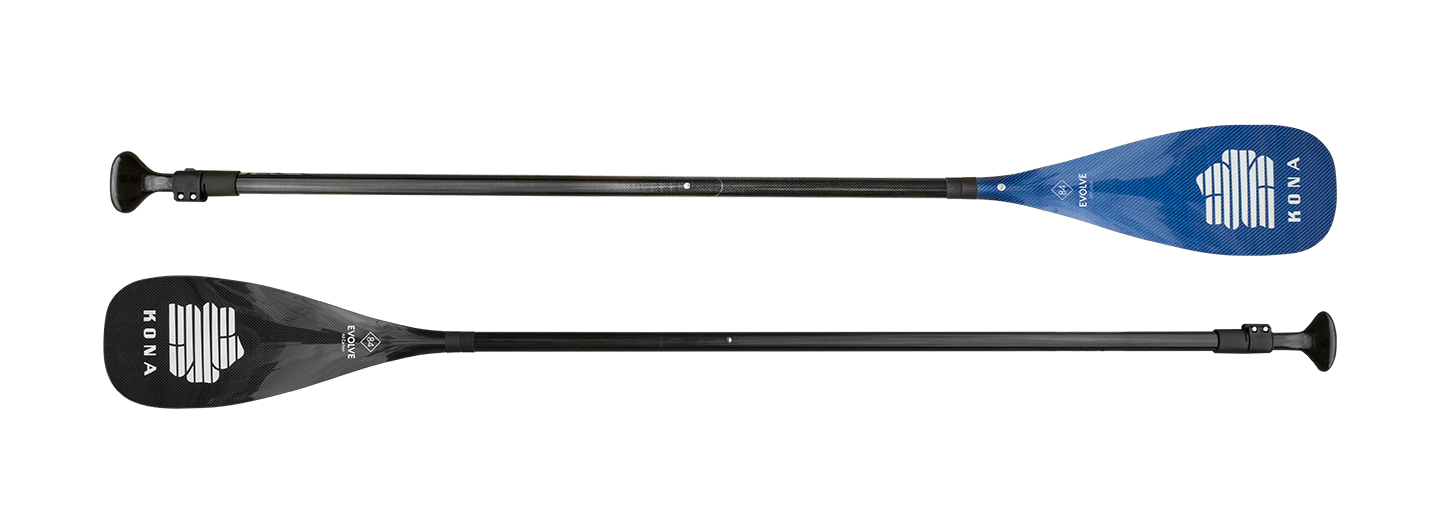
SUP paddle for training and competition? In SUP, the paddle is basically as important as the board. In this article, we will cover some of the most important aspects when it comes to finding the right paddle for you and your specific needs.
Paddling frequency/cadence
When choosing a paddle for SUP , we should consider the frequency/cadence we paddle at at normal distance speed (below the aerobic threshold), i.e. a working time of around one hour of paddling. During these working hours we are normally in what we call gear 3 ( V3) - the distance gear, which means a frequency of around 40–60 strokes per minute. If you are a relatively large and powerful paddler, you will probably be around 40 SPM ( strokes per minute ), and if you are a little shorter and lighter , it may feel more natural to be around 60 SPM .
Size and weight
If you know that you like to maintain a higher frequency and want a suitable SUP paddle, you should usually choose one with a relatively small blade size in order to maintain a natural and ergonomic arm pendulum. This way we avoid having to “lift” the paddle forward or actively “steer” the paddle with unnecessary muscle power through the paddle stroke. A paddle with a larger blade is in most cases also slightly heavier, which means that you get tired faster. If we are normally at a frequency of around 50 SPM This results in about 3,000 paddle cycles/strokes per hour and we soon realize that the weight and function of the paddle are of great importance in avoiding overload and making paddling as efficient as possible.
SUP paddle length
The total length of the paddle also has a great impact on the frequency we can maintain. A paddle that is too long means that each individual paddle cycle will take longer as we either have to lift the paddle higher or sweep the paddle further sideways from the recess until the next insertion. The fact that this so-called air /pendulum phase takes longer is a disadvantage as it causes us to both lose drive and make us unstable. A paddle that is too long can also cause the shoulders to work in unfavorable positions and thereby be loaded incorrectly with increased fatigue and risk of injury as a result.
Short and compact
A relatively short paddle means that we can maintain a higher frequency as the “air phase” is generally shorter because we can then lift the paddle the straightest and thus the shortest path from the recess to the ice. However, a short paddle also requires us to curl up and put more strain on our legs in order not to overstrain the lower back. A more curled up (compact) position makes us both more stable and powerful but initially requires more training as we will quickly understand the meaning of lactic acid in the thighs .
The paddle blade
The size (surface area) of the paddle blade is also of great importance for the frequency. The larger the surface area of the SUP paddle blade, the better the so-called "grip" the blade provides, i.e. how much resistance the blade creates in the water when inserted . The greater the resistance the blade creates, the longer we will be able to generate power and thus speed. It is only during the so-called “ drive phase ”, when the entire blade is underwater , that we can influence the speed and increase speed . Simply put, if we can create power over a longer period of time, each paddle cycle will also take longer and then we will not have time to take more paddle strokes even if we wanted to.
Blade profile and “slippage”
A relatively small blade naturally does not provide as good grip /resistance in the water as a blade with a larger surface area if it were to be used by a heavier and more powerful paddler, as his strength would cause the paddle to slide backwards during the propulsion phase and create what we call “slippage”. This means that under these conditions we will consume a lot of energy that will not result in increased speed. Using different types of blade profiles is a way to increase the blade surface area and thereby the grip without making the blade wider or longer. This usually involves creating different types of concavities on the back of the blade.
Conventional paddling techniques
In the more conventional SUP paddling techniques , “Hawaiian stroke” and “ Tahitian stroke”, which are based on how to paddle an outrigger canoe (OC) and other types of seated paddling and which are normally used in countries where there is not the same reference to cross-country skiing as we have here in Scandinavia, the world elite use SUP paddles that are about 15 cm longer than the body length. The idea here is to use a longer shaft in order to get the blade deeper into the water to “unbroken” water and thereby get a better grip /resistance .
“Crosswater/Nordic stroke” - cross-country skiing on the water
At The paddling techniques “Crosswater” and “Nordic stroke”, both of which are based primarily on cross-country skiing and which were developed by our own expert and head coach for the Kona SUP Race Team, Magnus R Lindstedt , today use paddles with lengths from about 10 cm above body length down to about 10 cm below body length. This is because we have seen how the total length of the paddle affects both power transmission and propulsion.
Effective paddling technique for SUP
Through the development of these techniques for SUP, we have also seen how we can also use the whole body to better propel the SUP board , in relation to the more internationally accepted paddling techniques that are based on sitting paddling and thereby also a sitting position.
Full-body paddling
In the more conventional paddling techniques For SUP you generally use your arms and upper body to propel the SUP board . With “ Crosswater and Nordic stroke” you instead use your whole body and there your body weight together with gravity provides both a more energy -efficient and powerful drive.
The right SUP paddle
If you would like further help finding the right SUP paddle for you or want to know more about "Nordic stroke" and effective paddling technique or training for SUP , do not hesitate to contact us or book an introductory session in our webshop.